Best Website Strategy for Local Businesses in 2026
Discover the best website strategy for local businesses to improve visibility, build trust, and convert visitors into leads using SEO and automation.
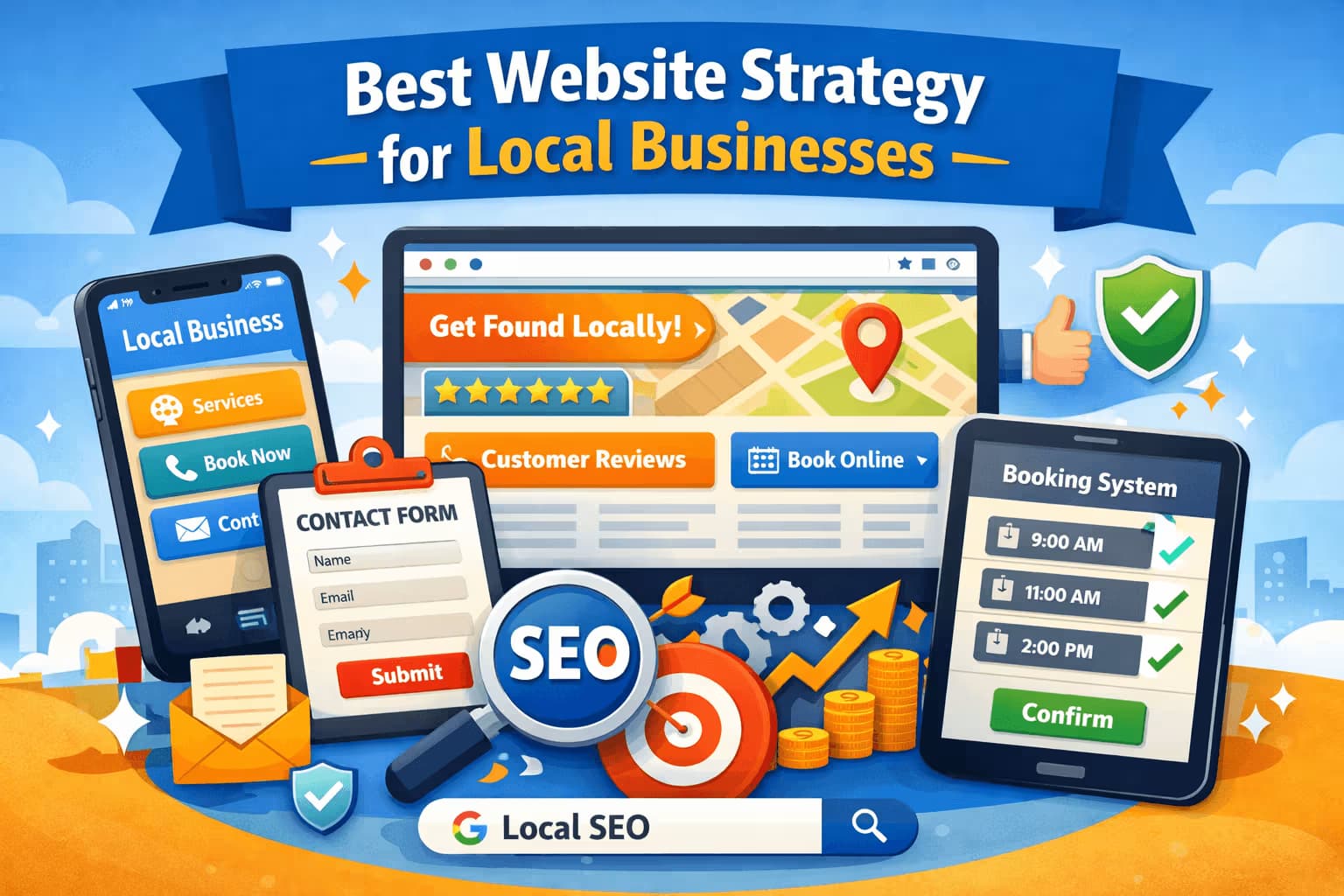
Best Website Strategy for Local Businesses (2026 Guide)
If you run a local business, your website is often your first impression, first conversation, and sometimes your first sale.
A strong website strategy does not just make you look professional — it helps customers find you, trust you, and contact you easily.
This guide explains what actually works for local businesses in 2026, using proven strategies and SEO practices that help you rank without competing against massive national brands.
Why a Strong Website Strategy Matters for Local Businesses
Local customers search with intent. When someone types:
- nail art salon near me
- best digital agency in [city]
- local shop open today
They are ready to act.
A well-optimized local business website helps you:
- Show up in local search results
- Build trust instantly
- Convert visitors into leads, calls, or bookings
If your competitors appear before you, they get the customer.
What Is the Best Website Structure for Local Businesses?
1. Mobile-First Website Design
Over 70% of local searches happen on mobile devices. If your website is not optimized for mobile, you are losing customers daily.
Best practices include:
- Fast loading speed (under 3 seconds)
- Click-to-call buttons
- Easy navigation
- Thumb-friendly call-to-action buttons
- Clear messaging above the fold
A mobile-first website is no longer optional. It is essential.
2. Clear Services with Location-Based Pages
Your services should be simple, clear, and jargon-free.
Instead of one generic services page, create targeted pages such as:
- Web Design Services in New York
- Affordable SEO Services for Small Businesses
- Local Website Development Services in [City]
This approach helps you rank for low-competition, high-intent keywords and improves local visibility.
Each service page should include:
- A clear problem-solution explanation
- Benefits (not just features)
- Frequently asked questions related to that service
- A strong call to action
How Do CTAs Improve Local Website Conversions?
A call to action tells visitors exactly what to do next.
High-converting CTA examples include:
- Get a Free Quote
- Book a Free Consultation
- Call Now – Available Today
- Schedule an Appointment
CTA Best Practices
- Place one above the fold
- Repeat naturally throughout the page
- Keep it simple and action-driven
- Use contrasting button styles
Clear calls to action reduce confusion and increase conversions.
Why Automation Tools Are a Game-Changer
Automation saves time and improves the customer experience.
Must-have tools for local businesses:
- Contact forms with instant notifications
- Appointment scheduling systems
- WhatsApp or live chat integration
- Email auto-responses
These tools ensure no lead is missed, even outside business hours.
A website that responds instantly builds trust faster than one that does not.
How Trust Signals Increase Sales for Local Businesses
People trust businesses that look real and transparent.
Essential Trust Elements
- Google reviews and testimonials
- Real photos (office, team, or work samples)
- Certifications and badges
- Clear contact information
- Physical address (if applicable)
Trust signals reduce hesitation and significantly improve conversions.
Local SEO: The Backbone of Visibility
Without local SEO, even the best website will not be found.
Local SEO Checklist
- Google Business Profile optimization
- NAP consistency (Name, Address, Phone)
- Local keywords in titles and headings
- Embedded Google Maps
- Local backlinks
- Structured data (Local Business schema)
Example Low-Competition Keywords
- best website for local businesses
- small business website strategy
- local business website optimization
Ranking locally is often easier and more profitable than competing nationally.
Common Questions Local Business Owners Ask
Do I Need a Website If I Have Social Media?
Yes.
Social media builds awareness, but your website converts visitors and gives you full control over your traffic and brand.
You do not own your social media audience — you own your website.
How Many Pages Should a Local Business Website Have?
At minimum:
- Home page
- Services page
- About page
- Contact page
For better SEO performance, consider adding:
- Individual service pages
- Location-specific pages
- Blog articles targeting local keywords
Is a One-Page Website Enough?
For very small or new businesses, it can work.
For long-term growth and stronger SEO performance, multi-page websites perform better.
Final Thoughts: What Makes a Local Business Website Successful?
A successful local business website is:
- Mobile-first
- SEO-optimized
- Trust-driven
- Conversion-focused
- Automated for efficiency
When done right, your website becomes a 24/7 sales and support system that consistently generates leads and builds credibility.