SEO for Landing Pages: The 2026 Blueprint to Rank on Google and Increase Conversion Rate
Learn how to build an SEO landing page that ranks on Google and improves conversion rate using proven local, dynamic, and PPC optimization strategies.
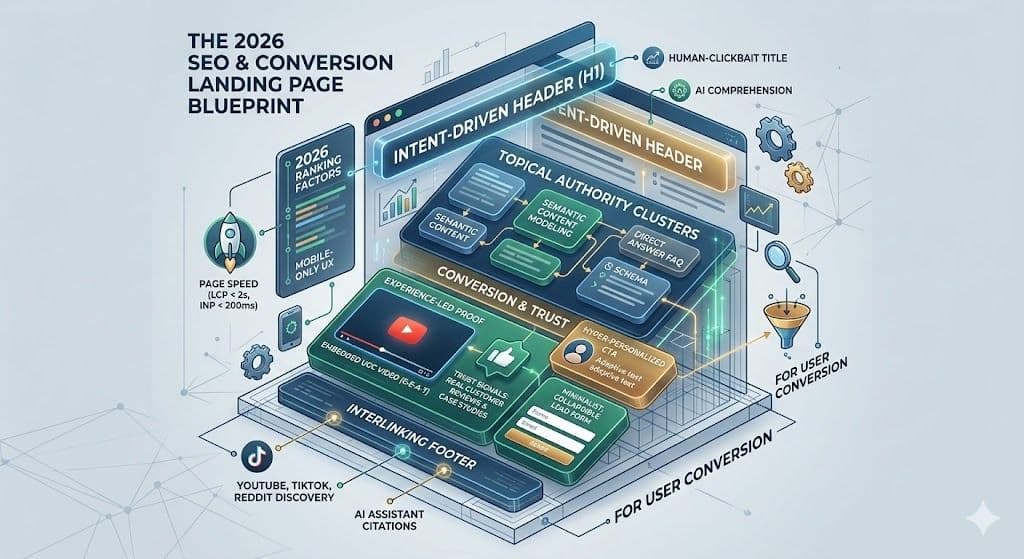
If your landing page looks great but gets zero organic traffic, it is not an asset. It is just design.
Most businesses obsess over colors, copy, and CTAs, yet ignore seo for landing pages. Then they wonder why competitors outrank them.
In this guide, I will show you how to build a search engine optimization landing page that ranks for high intent keywords like how to build a high converting landing page and landing page best practices 2026, while still improving your landing page conversion rate.
You will learn:
- The difference between landing page vs website structure
- How to optimize local landing pages properly
- When to use dynamic landing pages
- How to balance SEO and PPC landing page strategy
Let’s build this correctly.
What Is SEO for Landing Pages
SEO for landing pages means optimizing a page designed for conversion so that it also ranks organically.
A traditional PPC landing page is short and aggressive. An SEO landing page must:
- Rank for keywords
- Answer search intent
- Build authority
- Convert traffic
That requires depth.
Landing Page vs Website: Why It Matters
A website distributes content across multiple pages. A landing page focuses on a single objective.
However, when you create a search engine optimization landing page, it needs enough structured content to compete in search results.
If someone searches “seo landing page strategy”, Google expects:
- Clear explanation
- Examples
- Structured headings
- Supporting sections
Minimal pages rarely rank long term.
Step 1: Keyword Architecture for an SEO Landing Page
Your page must revolve around a primary keyword.
Primary Keyword: seo for landing pages
Secondary Keywords:
- search engine optimization landing page
- landing page conversion rate
- local seo landing page
- local landing pages
- dynamic landing pages
- ppc landing page
- landing page best practices 2026
Use the primary keyword in:
- H1
- First 100 words
- One subheading
Use secondary keywords naturally inside H2 and H3 sections.
Avoid stuffing. Context matters more than repetition.
Step 2: Structuring a Search Engine Optimization Landing Page
Here is the structure I recommend.
1. Above the Fold
- Clear H1 with primary keyword
- Strong value proposition
- Short benefit list
- Primary CTA
2. Intent Section
Answer the core query clearly. For example:
What makes a landing page rank and convert?
3. Depth Section
Explain:
- Technical SEO
- Content structure
- Conversion framework
4. Trust Section
- Testimonials
- Data
- Case studies
5. FAQ Section
Target long tail keywords.
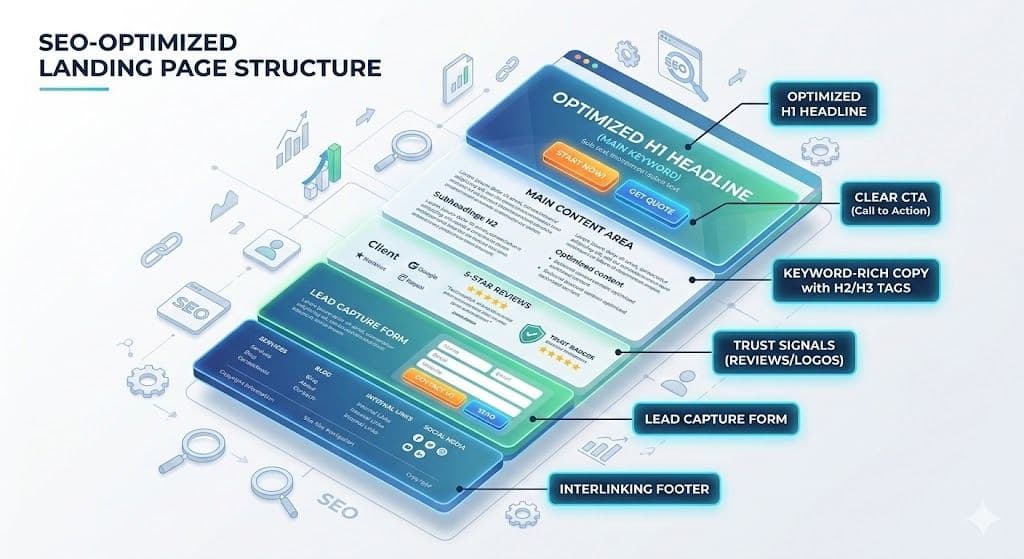 SEO Landing Page Structure Diagram
Step 3: How to Improve Landing Page Conversion Rate Without Hurting SEO
Many people sabotage rankings while trying to increase conversions.
Common mistakes:
- Removing navigation completely
- Cutting content below 700 words
- Eliminating internal links
Instead, balance both.
Conversion + SEO Balance Framework
| Section | Purpose | SEO Role |
|---|---|---|
| Hero Section | Capture attention | Keyword placement |
| Benefits | Persuasion | Semantic depth |
| Social Proof | Trust | Contextual relevance |
| FAQ | Objection handling | Long tail targeting |
A high converting SEO landing page is not short. It is structured.
Step 4: Local SEO Landing Page Strategy
If you operate in multiple cities, local landing pages are powerful.
Each local seo landing page should include:
- City specific H1
- Localized content
- Google Map embed
- Location testimonials
- NAP consistency
Example:
“Digital Marketing Services in Austin” “Real Estate Landing Page Optimization in Miami”
This works because local search intent is strong.
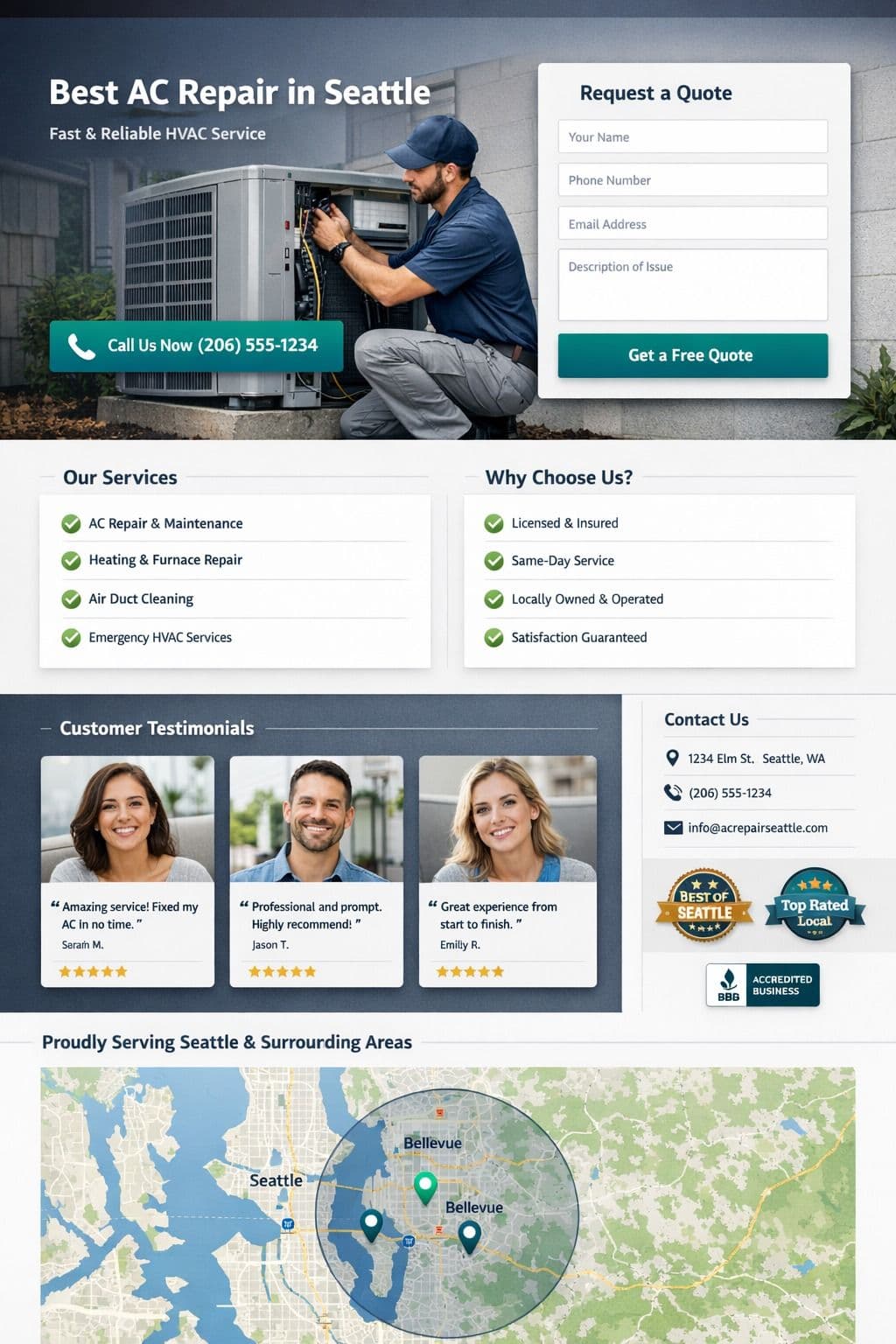 Local SEO Landing Page Example
Step 5: Dynamic Landing Pages for Scale
Dynamic landing pages allow you to create multiple versions of a page based on:
- Location
- Industry
- Product variation
They are effective when:
- Content blocks are unique
- Each page has original intro text
- Internal linking is controlled
If content is duplicated, rankings drop.
Dynamic pages must feel handcrafted, even if generated programmatically.
Step 6: SEO Landing Page vs PPC Landing Page
A ppc landing page prioritizes speed and conversion.
An SEO landing page prioritizes:
- Depth
- Authority
- Intent coverage
Quick Comparison
| Factor | SEO Landing Page | PPC Landing Page |
|---|---|---|
| Content Length | 1,200 to 2,000 words | 500 to 900 words |
| Internal Links | Yes | Minimal |
| Schema | Recommended | Optional |
| Conversion Focus | Balanced | High urgency |
If you are running Google Ads, create a separate PPC version instead of using your main SEO page.
Step 7: Real Example Breakdown
Here is a practical breakdown video showing how structured landing pages rank and convert.
Step 8: Technical Optimization Checklist
A search engine optimization landing page must satisfy technical signals.
Core Technical Checklist
- Optimized title tag with primary keyword
- Meta description written for CTR
- Image alt tags
- Fast loading speed
- Mobile responsive layout
- FAQ schema
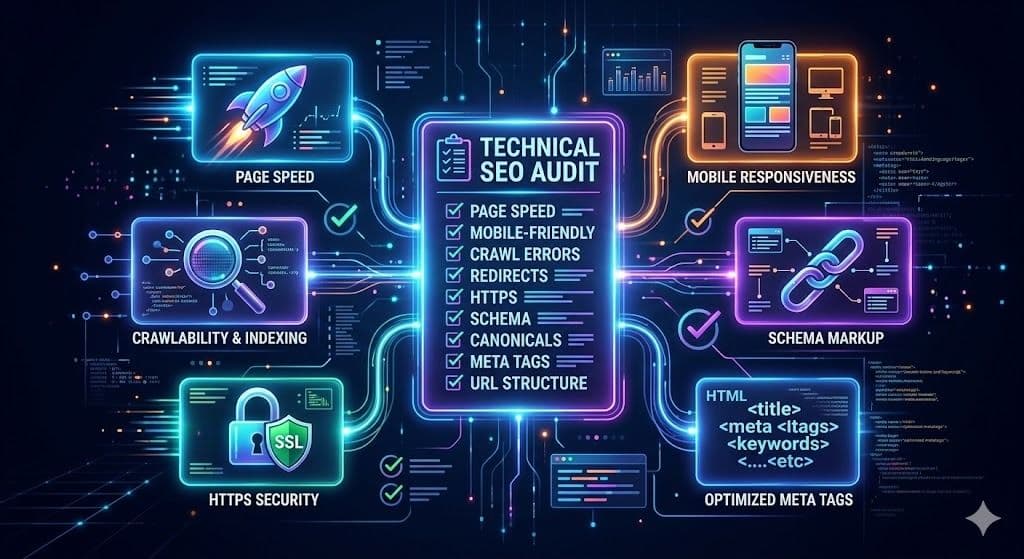 Landing Page SEO Technical Checklist
Step 9: Landing Page Best Practices 2026
In 2026, Google rewards:
- Experience depth
- Topical authority
- Structured semantic content
- Helpful content signals
Modern landing page best practices include:
- Personalization based on traffic source
- AI assisted testing
- Clear above the fold messaging
- Frictionless forms
But the fundamentals remain:
Clarity ranks. Relevance converts. Testing improves both.
Advanced Strategy: Combining SEO and Paid Traffic
If you want to scale fast:
- Build your main SEO landing page
- Create a separate PPC landing page
- Use PPC data to refine SEO messaging
- Expand into supporting local landing pages
This creates a feedback loop between organic and paid acquisition.
Final Call to Action
If your landing page is not ranking, you are paying for every click forever.
Start by auditing:
- Keyword alignment
- Content depth
- Internal linking
- Conversion structure
Build one properly structured SEO landing page first. Then expand into dynamic landing pages and local landing pages strategically.
If you execute this blueprint consistently, you will not just improve rankings. You will increase your landing page conversion rate sustainably.
Organic traffic compounds.
Start building assets, not dependencies.